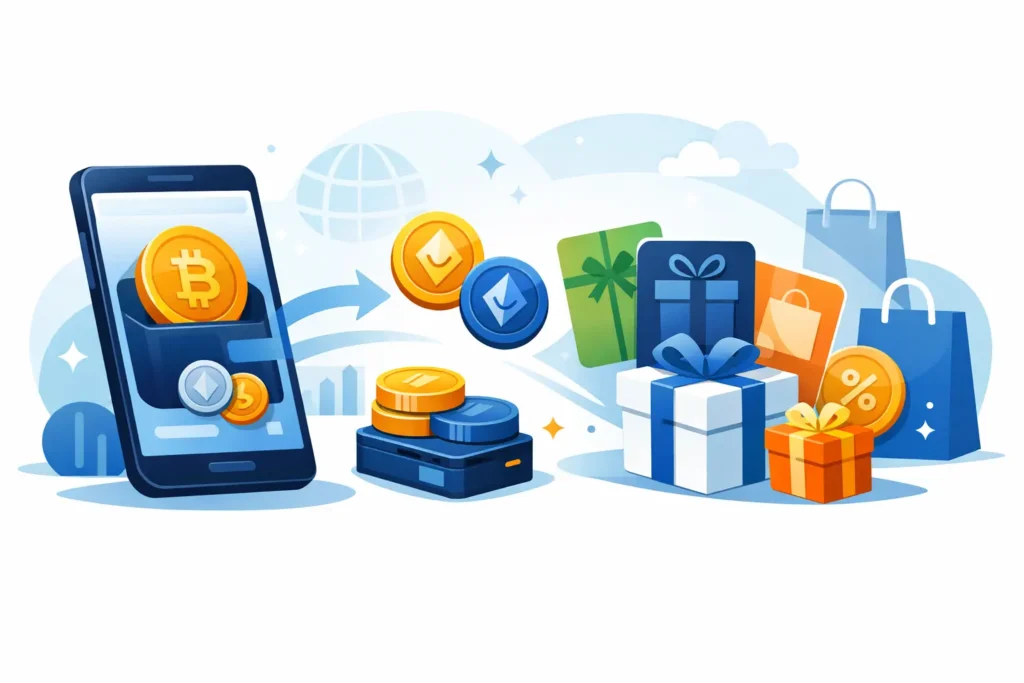
That moment when your card gets declined, your bank flags a payment, or a store will not accept your region is usually when people start looking up how to get gift cards with crypto. The appeal is simple – pay with the coins you already hold, get a digital code fast, and use it for gaming, streaming, shopping, or app purchases without the usual checkout friction.
Crypto gift card purchases are not complicated, but the experience depends a lot on where you buy, what coin you use, and how quickly the seller delivers the code. Some platforms make it a three-minute transaction. Others add extra verification, delayed fulfillment, or a catalog that looks big until you realize the brand you actually want is out of stock.
How to get gift cards with crypto step by step
The fastest path is usually the same whether you want Steam credit, a PlayStation card, Xbox balance, Netflix, Spotify, Apple, Nintendo, Roblox, or a shopping brand. First, choose the exact gift card you want and confirm the value, currency, and region. That matters more than many buyers expect. A US account may not redeem a code issued for another market, and the wrong denomination can be annoying if you are trying to match a subscription or in-game purchase.
Next, add the gift card to your cart and pick crypto at checkout. Most crypto-first sellers support major coins like Bitcoin and Ethereum, while better platforms also include stablecoins such as USDT and a wider mix of altcoins. If you already keep funds in a wallet, this is where the process feels much faster than a traditional bank payment. You send the exact amount, wait for confirmation, and the order moves to delivery.
Then comes the part buyers care about most – receiving the code. With a legit digital seller, the code is typically delivered instantly or within a short processing window after payment clears. That means you can redeem it right away on your chosen platform instead of waiting for physical shipping or manual approval.
Why people buy gift cards with crypto
Most buyers are not doing this for novelty. They want control, speed, and fewer payment problems. If you already hold crypto, using it for a gift card is often more practical than cashing out to a bank first, especially when you only need platform credit for a game, subscription, or app store purchase.
Privacy is another reason. Buying a digital code with crypto can reduce how much personal billing data you need to share, depending on the seller and the order size. That does not mean anonymous in every case, and it should not be treated that way. Some merchants still apply fraud checks or ask for verification on suspicious orders. But for many users, the process still feels cleaner than handing over full card details for every purchase.
There is also a simple access advantage. Gift cards can work as a bridge when a platform does not accept your preferred payment method directly. Instead of trying to pay a gaming store, streaming service, or app marketplace with crypto, you buy the corresponding prepaid code and redeem it there.
What to check before you pay
The biggest mistake is treating all gift card sellers as interchangeable. They are not. If you want a smooth transaction, check three things before you send any crypto.
First, look at delivery speed. Some sites say digital delivery but still review orders manually. If you need the code now, instant delivery matters. Second, confirm the brand catalog is actually relevant. A long list of obscure brands does not help if you only want PlayStation, Steam, Xbox, Netflix, Apple, Amazon, or Nintendo. Third, review the payment options. A crypto-first checkout should support more than one major coin and show the payment flow clearly.
Trust signals matter too. Clear product descriptions, transparent regional restrictions, visible support availability, and a straightforward checkout are all good signs. A legitimate seller should make it obvious what you are buying, how the code is delivered, and what happens if there is a payment issue.
How to get gift cards with crypto without mistakes
Buying with crypto is fast, but it is less forgiving if you rush. Blockchain payments are not the same as canceling a card transaction, so accuracy matters.
Start with the network. If you are paying with USDT, for example, make sure you use the exact network requested at checkout. Sending funds on the wrong chain can delay recovery or make the payment impossible to match. The same rule applies to wallet addresses and exact payment amounts. If the platform generates a specific invoice, follow it closely.
Pay attention to timing as well. Some checkouts lock the crypto price for a limited window. If you wait too long and the invoice expires, the amount may change or the merchant may need to review the payment manually. That is not unusual – it is just part of crypto settlement.
You should also verify redemption details before you buy. Gift cards can be region-locked, platform-specific, or tied to a certain account type. A PlayStation card is not interchangeable with a Steam card, and a US code may not work on an account registered elsewhere. Good sellers state this clearly, but the buyer still needs to read the product page.
Best use cases for crypto gift cards
Gaming is the obvious one. If you buy digital games, DLC, skins, subscriptions, or in-game currency, prepaid codes are one of the easiest ways to turn crypto into usable store balance. Steam, Xbox, PlayStation, Nintendo, Roblox, and Riot users tend to benefit the most because the codes are easy to redeem and the value is immediate.
Streaming and entertainment are close behind. A Netflix, Spotify, or app store card can be more convenient than updating billing details or using a bank card you would rather not connect to recurring subscriptions. It is also useful for gifts. Sending someone a digital code is faster than shipping something physical, and they can use it right away.
Shopping and everyday digital spending can make sense too, but this is where expectations should stay realistic. A gift card is not the same as cash. It is best when you already know the store or service you want to fund. If you are undecided, converting crypto into a highly specific brand card may feel limiting later.
Common trade-offs to understand
The main benefit here is speed, but speed depends on the seller. A platform built around instant digital delivery will feel much better than one that treats crypto as a side payment method. That is why the buying experience can vary so much from site to site.
Fees are another factor. You may face network fees from your wallet, and some merchants build pricing differences into the product or exchange rate. Stablecoins can reduce volatility during checkout, while Bitcoin or Ethereum may be more familiar for some users. There is no single best choice for everyone. It depends on what you hold, what fees look like at the time, and how quickly you want the transaction confirmed.
There is also the support question. If something goes wrong, you want an actual support process, not a vague contact form and silence. Digital goods move fast, so responsive support matters when a code is delayed or a payment needs matching.
Choosing a seller that fits how you buy
If your goal is convenience, choose a platform that feels built for digital code purchases, not one that happens to list a few gift cards on the side. You want a recognizable catalog, secure payment, clear product information, and instant delivery where possible. For crypto buyers, it also helps when the checkout supports multiple coins instead of forcing one narrow payment route.
That is why many buyers prefer a store like lvlkey. The model is simple: pick a mainstream gift card, pay with crypto, and receive the code fast. For gamers, streaming users, and privacy-conscious shoppers, that kind of checkout removes most of the friction that makes traditional payments annoying in the first place.
If you are new to this, start with a small purchase from a brand you already use. Make sure the region matches, complete the crypto payment carefully, and redeem the code as soon as it arrives. Once you have done it once, the process is easy to repeat.
Crypto does not need to sit in your wallet waiting for the perfect use case. Sometimes the smartest move is the simple one – turn it into a code you can actually use today.